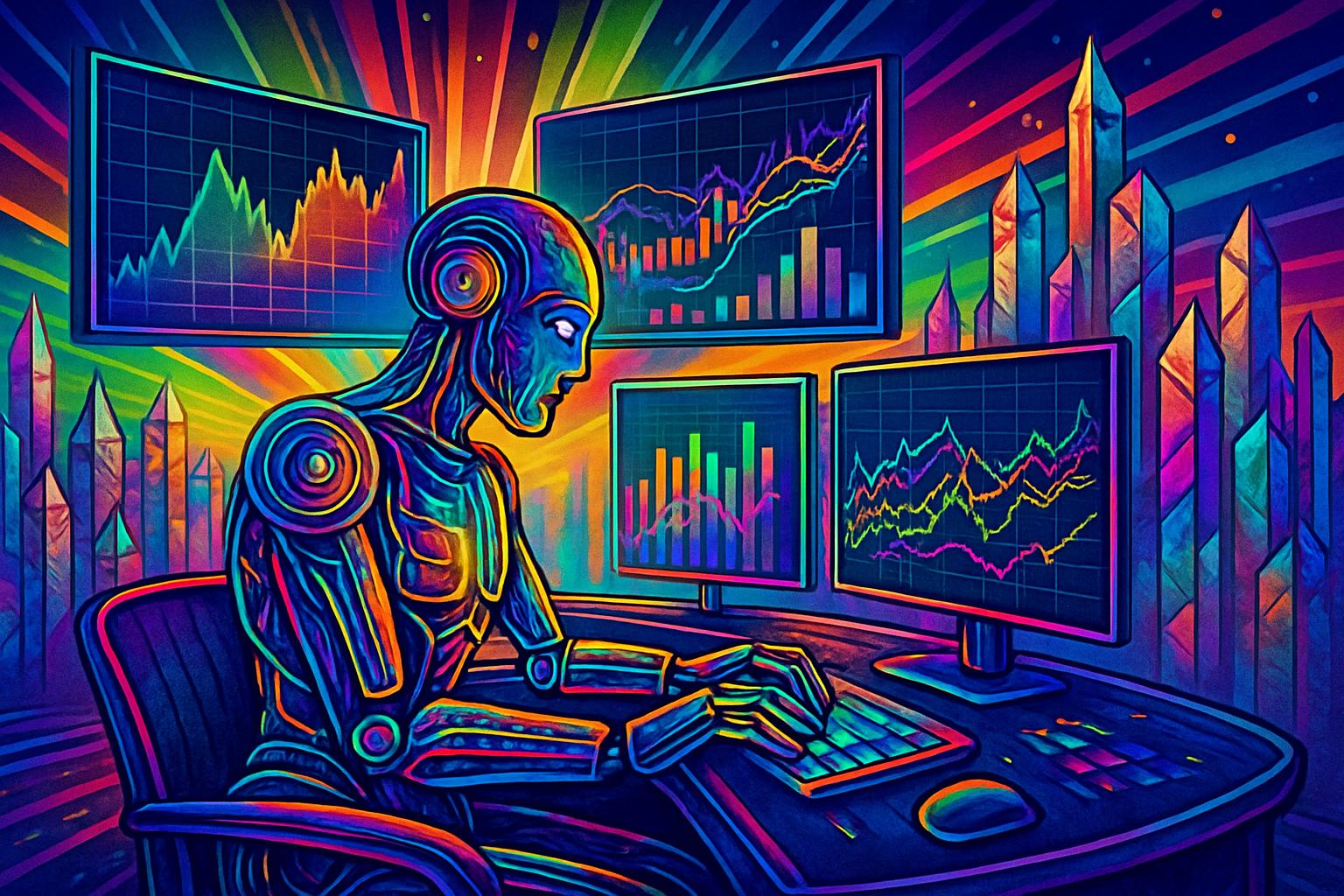
Can an AI really help you beat the stock market, or is it just another flashy tool needing human guidance? A bold experiment gave GPT-4 a shot at managing a $100 portfolio, raising intriguing questions about where technology fits in the future of investing. Is AI truly ready for the challenge?
Someone Gave ChatGPT $100 and Let It Trade Stocks for a Month explores an unusual experiment to see how a widely known AI tool, GPT-4, would fare as a stock trader. With just $100, researcher Nathan Smith used his skills and some creativity to guide the model in choosing stocks over a month. By blending his understanding of the market with daily inputs of trading data, Smith found that the portfolio returned a 25% gain in value. While that might sound impressive, the actual earnings only totaled $25—unsurprising given the original budget was quite small. Even so, it’s a better outcome than some popular indexes like the S&P 500 saw during the same period.
To manage the risk, Smith adopted “stop-loss” rules requiring the AI to automatically sell stocks if their value dipped to a specific threshold. He also explained that he had to manually assist the system by feeding it daily updates about its portfolio. This input allowed the experiment to run efficiently but also highlights the limitations of AI trading without human involvement. Although the AI’s performance appears promising, Smith and others in academic circles caution that scaling such systems to larger portfolios could bring challenges and different outcomes. The experiment underscores how AI might complement, rather than replace, human decision-making in the financial world.
Why It Matters
The story grabs attention because it taps into growing interest in AI’s capability to handle complex tasks like stock trading. GPT-4’s ability to make surprisingly effective trading decisions raises important questions about the role machine learning tools might play in personal finance and investing. While it did outperform certain indexes, the project also demonstrates the significant human involvement required to keep the system on track. Unlike claims about AI being able to handle these tasks independently, this experiment shows that even advanced AI models still rely on human oversight to function well in practical applications.
Meanwhile, as AI-assisted trading gains more traction, it could change how smaller investors approach the stock market. However, academics point out a potential chain reaction: if enough participants adopt the same strategies driven by AI, market dynamics could shift such that the software’s unique benefits diminish over time. This raises questions about AI’s long-term practicality as a market tool that can outperform traditional methods.
Benefits
- AI might provide smaller investors with useful tools that level the playing field, especially for researching under-covered stocks.
- Automated models like GPT-4 could analyze data quickly, helping investors make decisions faster than they could on their own.
- Such systems could act as helpful decision-making aids, especially when combined with human expertise to refine strategies.
Concerns
- The need for human input indicates that AI tools like GPT-4 are not yet ready to completely manage financial portfolios on their own.
- Over time, if many traders adopt similar AI-driven methods, the unique insights these tools provide could lose their effectiveness as markets adjust.
- Using AI in financial markets might increase risks for inexperienced or overly trusting users who rely too heavily on the technology without proper checks in place.
Possible Business Use Cases
- Create a subscription-based platform for AI-driven stock suggestions focusing on small-cap investments for beginner traders.
- Develop an educational tool that integrates real-time AI trading simulations to teach users how to combine AI analytics with sound investing principles.
- Offer a managed service for small businesses or investors where AI handles market analysis, but decisions remain guided by professional consultants.
As we consider this experiment, it becomes clear that while AI might not yet be fully autonomous in trading, its capability to support smarter decisions stands out. For now, the blending of AI’s efficiency with human judgment appears to be the most practical way forward. But like any tool, it’s essential to approach this technology cautiously, acknowledging its current limits and the broader economic consequences that could arise as it becomes more widely used. Whether this particular experiment leads to larger changes or prompts deeper reflection, it’s a reminder that meaningful progress will likely depend on collaboration between humans and machines, rather than relying solely on one or the other.
—
You can read the original article here.
Image Credit: GPT Image 1 / Rainbow Colored Illustration.
Make your own custom style AI image with lots of cool settings!
—
I consult with clients on generative AI-infused branding, web design, and digital marketing to help them generate leads, boost sales, increase efficiency & spark creativity.
Feel free to get in touch or book a call.