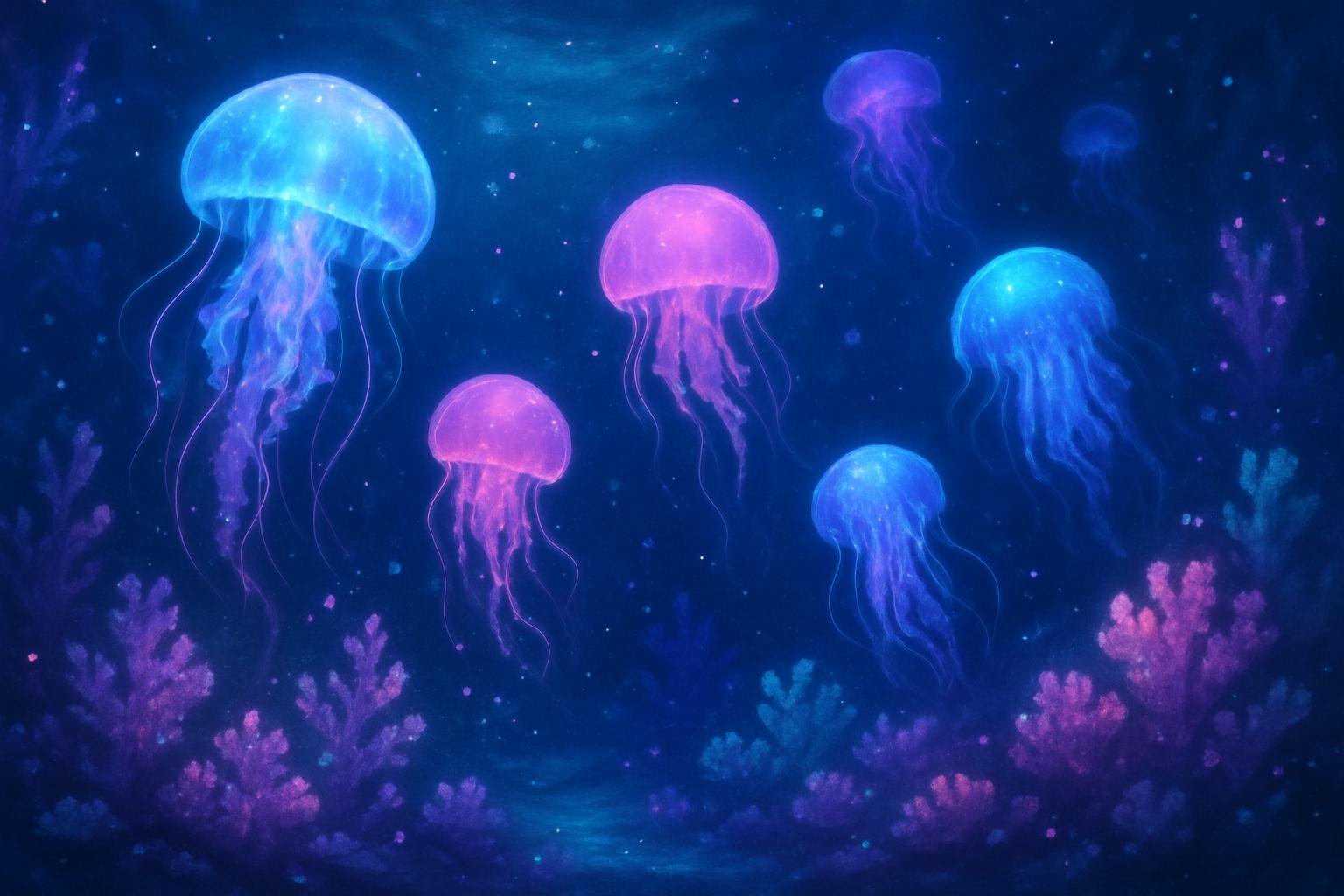
Floating silently beneath the ocean’s surface, jellyfish appear delicate and serene, yet they mask a world of surprising complexity. These ancient creatures have survived for millions of years with no brain, no heart, and no bones. What secrets lie beneath their fragile, transparent forms?
Jellyfish are some of the most captivating creatures in the ocean. With their delicate, flowing bodies and an air of mystery surrounding their behavior, they inspire curiosity and wonder. But there’s much more to these intriguing beings than their transparent appearance. Let’s examine what makes jellyfish so distinctive, from their abilities to their role in the marine ecosystem.
The Unique Lives of Jellyfish
Jellyfish are ancient creatures, believed to have been drifting through our oceans for over 500 million years—long before dinosaurs roamed the Earth. They belong to a group of animals without brains, hearts, or bones. Incredibly, they’re able to survive and thrive in oceans around the world, thanks to their specialized ability to detect and respond to the environment using a basic nerve net.
Their translucent bodies, sometimes called “bells,” are made up of 95% water. This allows them to float with minimal effort, conserving energy while moving through the water. Most species use their trailing tentacles to sting and capture prey such as small fish or plankton, and while their sting can be harmless in many cases, some pack enough power to deliver a dangerous venom. Their simplicity highlights how life doesn’t need to be complicated to be effective.
The Role of Jellyfish in the Ecosystem
Jellyfish are vital to marine ecosystems. As predators, they help maintain population balances by feeding on smaller fish and plankton. At the same time, they serve as food for several species, including sea turtles, sunfish, and certain types of birds. Without jellyfish, these marine diets would be disrupted, potentially impacting the delicate balance of ocean life.
Interestingly, jellyfish blooms—large swarms of jellyfish—can occur under certain environmental conditions, often influenced by changes in water temperatures, overfishing, and increased nutrient levels in the water. While these blooms may seem concerning in some cases, they’re part of the natural ebb and flow of ocean ecosystems, showing just how interconnected marine life is.
Jellyfish Adaptations: A Survival Approach
One of the most notable traits of jellyfish is their adaptability. Certain species have the ability to glow, thanks to bioluminescence. This light-emitting characteristic might be used to deter predators, communicate, or attract prey, though much about its purpose is still unknown.
There’s even a species, nicknamed the “immortal jellyfish,” that can revert to its juvenile form under specific conditions. This incredible ability allows it to essentially avoid death and start its life cycle anew, making it one of the most resilient animals on Earth. These survival mechanisms continue to demonstrate just how resourceful nature can be.
What Jellyfish Can Teach Us
Jellyfish aren’t just marine wonders—they’ve influenced everything from robotics to medicine. Their gelatinous structure has inspired underwater drone design, and researchers are studying their bioluminescence to improve medical imaging techniques. They even serve as a source of protein in certain cuisines, showcasing how humans and nature continuously intersect in unexpected ways.
More broadly, jellyfish highlight nature’s ability to adapt and endure. Despite their simplicity, they’ve existed longer than most species, thriving in environments that continually change. They’re proof that resilience and balance can lead to longevity and success.
Next time you see a jellyfish drifting gracefully in an aquarium or hear about their ecosystem role, think beyond their delicate beauty. These marine animals showcase just how exceptional life in our oceans really is, offering lessons and curiosities we are only beginning to unravel.
—
Image Credit: GPT Image 1 / Polygon Art.
Make your own custom style AI image with lots of cool settings!
—
I consult with clients on generative AI-infused branding, web design, and digital marketing to help them generate leads, boost sales, increase efficiency & spark creativity.
Feel free to get in touch or book a call.