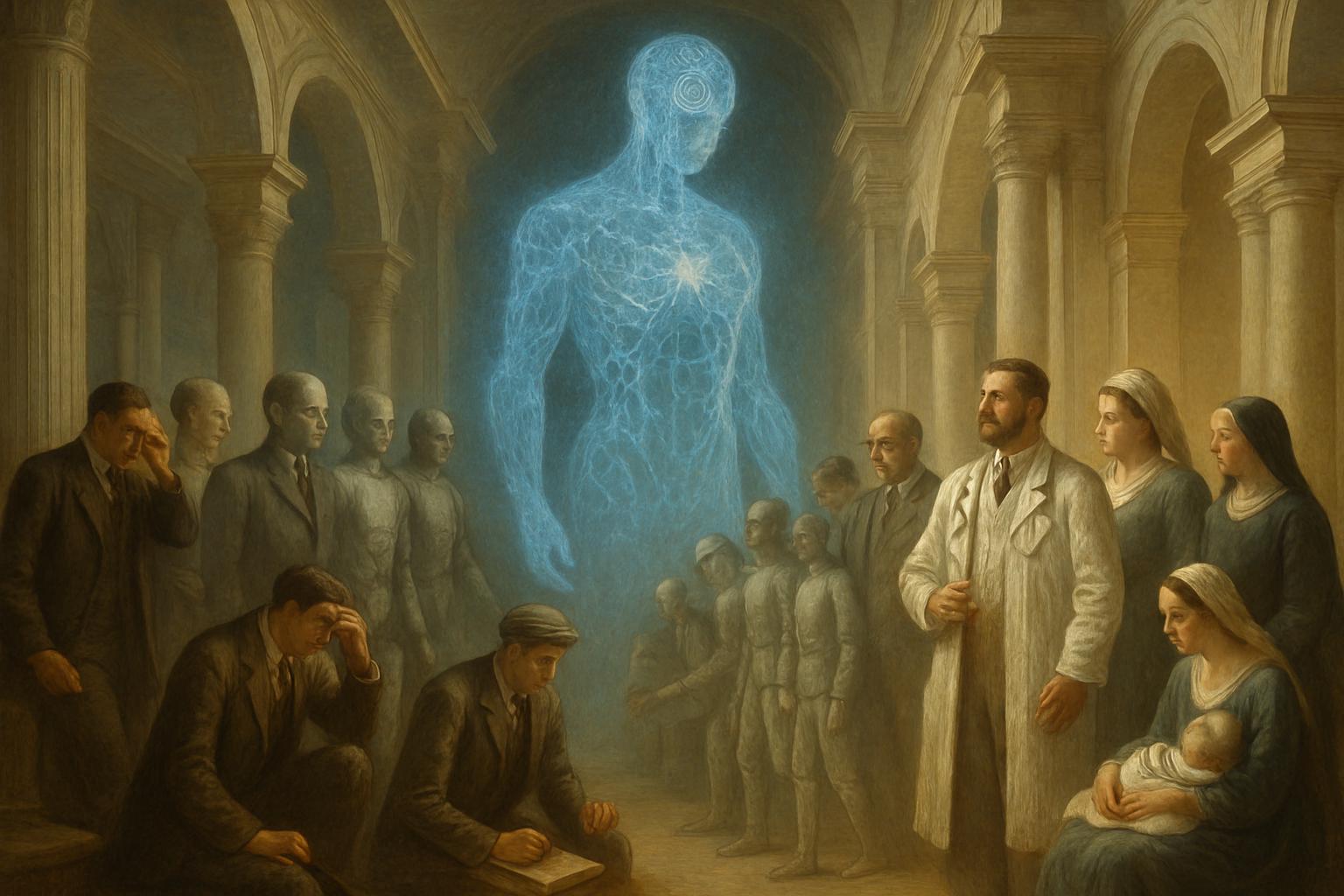
The rise of AI is reshaping industries and redefining what it means to work. While automation offers new possibilities, it also raises questions about job security and the limits of technology’s role. In a rapidly changing world, where does human expertise still hold firm?
The ‘Godfather of AI’ says this sector will be safe from being replaced by tech—but even then, only the ‘very skilled’ will hold down a job from Yahoo News discusses the changing impact of AI on the job market, focusing on predictions shared by Geoffrey Hinton, a notable figure in AI’s development. According to Hinton, the health care industry stands out as a field largely resistant to AI disruption due to its need for human empathy and highly specialized skills. However, he warns that disrupting other areas of work is nearly unavoidable, with roles involving repetitive tasks, such as receptionist or customer service positions, among the first to face automation.
Hinton points out that while AI can make some workers, such as doctors, much more efficient, overall workforce reductions across many industries remain a strong possibility. Unlike past technological shifts that generated new types of work, AI could replace forms of intellectual labor that don’t easily create demand for new roles. Reflecting Hinton’s views, other tech leaders predict a similar course, with reports highlighting that up to 50% of jobs could be automated by 2045. On an optimistic note, experts agree that health care’s demand and complexity make it an industry where human participation remains highly necessary, even as AI-enabled technologies improve performance.
In addition, health care executives and researchers see AI as an addition rather than a replacement in their field, making tasks more efficient while retaining the human touch for fundamental caregiving roles. Some experts foresee AI advancing medical research and improving productivity without fully eliminating employment opportunities in the sector. For many, this acknowledgment provides a compromise between embracing technological advances and maintaining humanity’s role in critical services.
Why This Matters
The rapid development of AI technologies carries significant implications for the global workforce and how industries adapt. Unlike other times of technological change, growth in AI could alter employment structures more fundamentally. Hinton’s point that jobs requiring only routine intellectual work will no longer be safe reflects this broader shift. In contrast, health care’s relatively low vulnerability to automation is tied not just to its technical specifics but also its reliance on human understanding and compassion.
These points draw attention to larger societal questions about the future of work, the boundaries of what machines should do, and how the workforce can prepare for these upcoming changes. Understanding which industries are less affected by this evolution highlights a need to rethink education and skills training to align with what AI cannot yet entirely replace.
Benefits
AI offers clear and measurable advantages, especially in optimizing tasks and increasing efficiency. In the health care sector, this could mean quicker diagnoses or better productivity without necessarily compromising the quality of care. With AI, there’s potential to reduce costs, improve accessibility, and even speed up research-based advances to tackle complex diseases more effectively.
Beyond health care, the efficiency improvements from AI could free up human labor for specialized or creative roles, addressing tasks that machines lack the context or emotional intelligence to handle. The inclusion of AI could also create opportunities for progress in designing improved tools and systems to support industries.
Concerns
One pressing concern centers around the speed and extent with which AI could impact jobs. Automation may prioritize efficiency over employment, leaving certain groups at a disadvantage. Specialized training will be crucial, but not everyone may keep up with demands to remain “qualified” enough for new roles. Ethical considerations in sectors like caregiving also raise questions about how much dependence on machine-based solutions is acceptable or practical for society at large. Finally, the use of AI will require addressing biases and ensuring accountability in decision-making processes where lives or livelihoods are involved.
Possible Business Use Cases
- Develop a platform that trains health care professionals to work with AI tools for improved productivity and better patient outcomes.
- Create a company focused on automating hospital logistics, such as sterilizing surgical tools or managing inventory, to maximize efficiency without reducing care quality.
- Launch an AI-driven diagnostic service that supports underserved areas by providing virtual consultations and early detection for common ailments.
The increasing use of AI raises important questions about what the future of work will look like and how people will adapt to these rapid shifts. While health care appears less vulnerable than most industries, no field is entirely immune to change. Finding ways to work with AI, rather than against it, is likely to be key for long-term stability. However, the conversation must also include the perspectives of workers, not just industry leaders, to ensure that technological progress leads to shared benefits rather than increased disparities. The coming changes compel us to rethink not only what we do, but how we respond as both workers and decision-makers.
—
You can read the original article here.
Image Credit: GPT Image 1 / Classicism. Make a custom style AI image HERE!
—
Some quick links:
- Sign up for our daily AI newsletter.
- Take our FREE workshops and learn how to automate EVERYTHING!
- And get in touch with RAIZOR to talk about cutting costs and boosting revenue for your business!