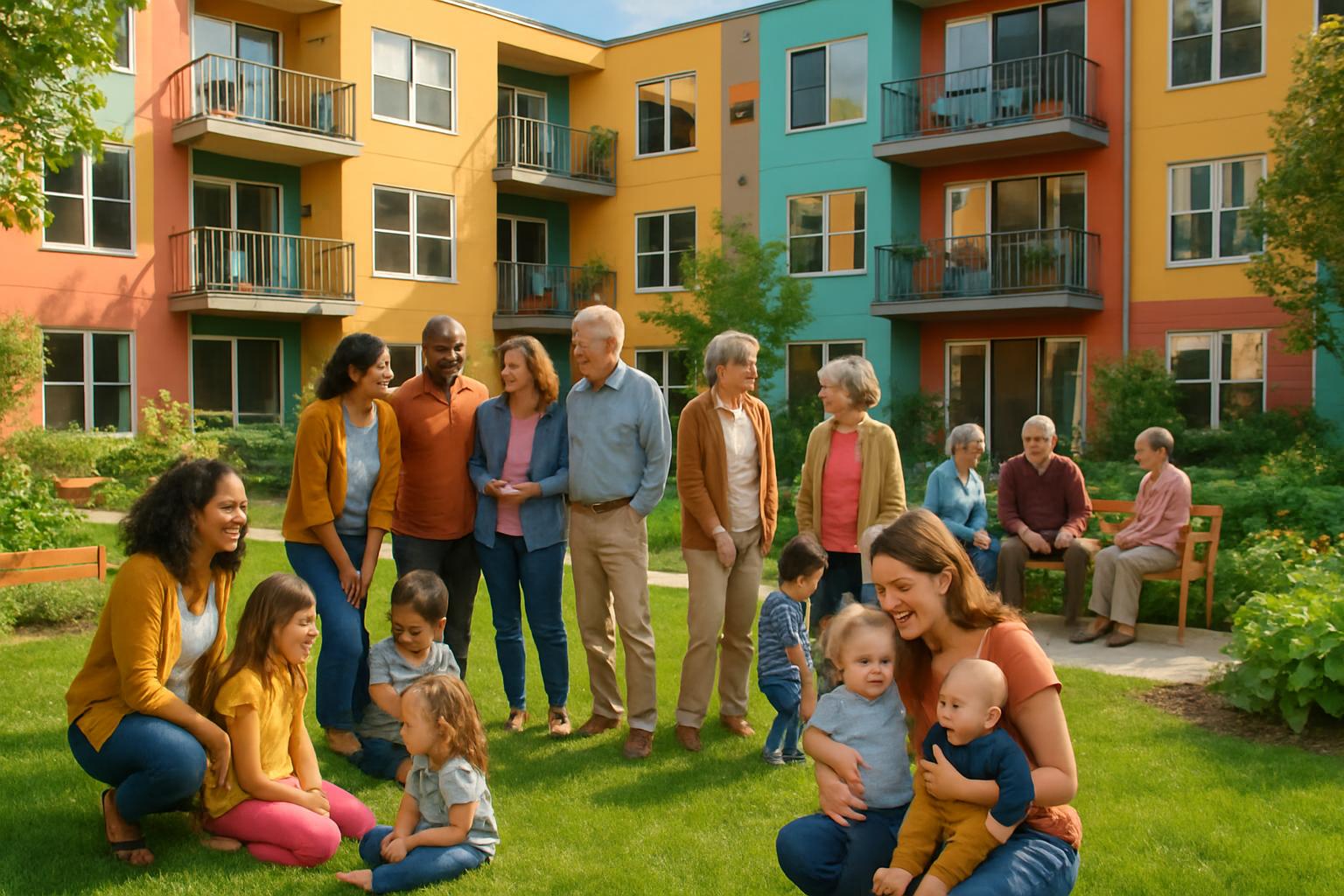
Amid the hurried rhythms of modern life, what if the path to deeper fulfillment lies not in self-sufficiency, but in the embrace of collective strength? Cohousing offers a reimagined way to live, anchored in trust and shared support. Could redefining belonging be the key to a more connected and resilient future?
Amid the often overwhelming and isolating tempo of modern life, a quiet shift is unfolding—a way of living built on connection, interdependence, and shared resources. For those longing for deeper ties within their communities, harmony rather than mere proximity, the concept of cohousing offers a practical response. It is an invitation, not to escape the challenges of communal living, but to approach them as pathways toward a more regenerative and humane way of being together.
A Solution for Isolation
The story of the Damgen family resonates deeply with the experiences of many who navigate the pressures of modern life, particularly during seasons of heightened isolation, like the pandemic. Feeling the weight of long hours spent alone with young children, Rachel Damgen and her husband Chris found themselves grappling with questions that many may find familiar: How can we create a life that nurtures not just our family but a wider web of meaningful relationships? How can we turn life’s daily struggles into opportunities for mutual support? Their answer came in the form of Daybreak Cohousing in Portland, Oregon.
Living within a planned community of 30 units, the Damgens are part of a local group practicing what might be called intentional collaboration. This environment, with its shared courtyards and cooperative ethos, has proven life-changing for their family. Rachel notes that their decision to have a third child came only after experiencing the encouraging support provided by their neighbors—a type of everyday trust and reciprocity that simply wasn’t available in their previous lifestyle.
A Community Like No Other
Cohousing’s strength lies in the way it reshapes relationships with those around us. As Chris Damgen aptly describes, these are not necessarily best friends or familial bonds, but something distinct—mutual allies brought together by design and choice. It’s a reminder of our shared human desire to be seen and supported, even as we carry the inevitable complexities of individuality.
Community member Deana Camp, who has called the same cohousing site home for over a decade, speaks to the powerful solution this lifestyle offers against loneliness. Though grieving the loss of her husband, she describes her life as rich with connection—baking cakes, sharing celebrations, and participating fully in the life of the group. Her story emphasizes how community can sustain us, even in the shadow of personal loss.
A Vision Built on Practice
Though almost poetic in its ideals, cohousing is neither effortless nor free of compromise. Residents juggle participation in multiple governance committees, from facilities management to chore oversight. Decisions affecting shared spaces require collective agreement, which can be painstaking. Sharing physical spaces, such as reduced square footage for family apartments, demands both creativity and adaptability.
Yet what cohousing residents gain far outweighs the conflicts or logistical challenges. When Rachel recalls the ease of leaning on a neighbor to watch a sick child while completing an important errand, it underscores the practical power of this model. These are not grand gestures but the quieter, everyday exchanges that connect lives together.
Rediscovering What It Means to Belong
While rooted in practicality, the cohousing movement also calls us to reflect on deeper questions about the kind of world we want to inhabit. Introduced to the United States in the early 1980s after its beginning in Denmark, it offers a vision of housing that counters the isolating trends of urban sprawl and individualism. Katie McCamant, one of the movement’s early adopters, saw its potential decades ago and continues to promote its growth despite the barriers of bureaucracy, costs, and cultural hesitations.
With approximately 200 such communities established across the nation, the evidence suggests a quiet appetite for this rethinking of living arrangements. It points toward a belief that together, through intentional systems of care and shared resources, new forms of resilience might arise—resilience not just for individuals or families, but for neighborhoods and, by extension, society at large.
Rethinking the Metrics of Success
Cohousing doesn’t trade in individual ambition for collective living, nor does it suggest we embrace perfection in our neighborhoods. What it offers instead is a reprioritization of values—a model where the triumphs are measured in fewer sleepless nights, spontaneous games in the courtyard, and the steady reassurance of knowing help is as close as a neighbor’s door.
What if we redefined prosperity, not by individual achievement but by the depth of connection woven into our lives? For those like the Damgens and their fellow residents at Daybreak Cohousing, this isn’t just a future aspiration; it’s the practical shape of their everyday lives. And perhaps their quiet effort can serve as both guidance and a grounding reminder for the rest of us: that the solutions to even our most complex challenges may already lie within the shared wisdom of community.
—
Image Credit: GPT Image 1 / Custom Prompt.
—
Building a world that works for everyone — through collaborative intelligence, practical solutions, and regenerative community.
Join the movement → eden.coop