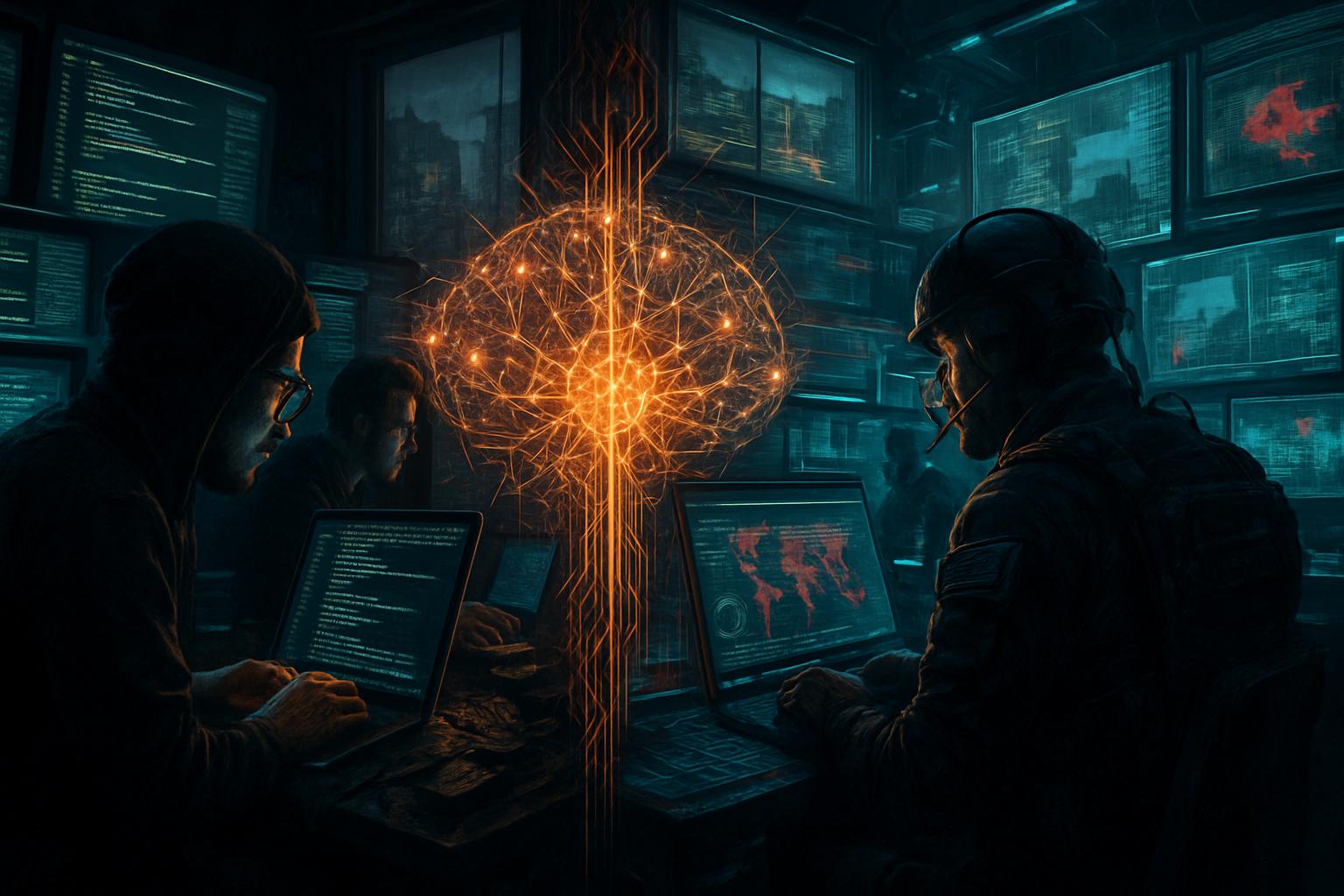
As hackers and defenders both turn to AI, the cybersecurity battle grows more complex. Automation, speed, and precision are becoming the norm on both sides, raising the stakes for businesses and security teams alike. Could the tools meant to protect us eventually become the greatest risk we face?
Criminals, good guys and foreign spies: Hackers everywhere are using AI now from NBC News examines how artificial intelligence is affecting the cybersecurity field, creating opportunities and risks for both hackers and defenders. As hackers adopt AI to improve their attacks, cybersecurity teams are also using the technology to maintain an advantage. This competition is growing as AI tools, such as large language models (LLMs), become more refined and accessible.
Summary
Hackers are now utilizing AI in concerning ways, such as embedding programs into phishing emails to automatically scan victims’ computers for sensitive files. A specific example includes Russian hackers using AI-assisted software in their campaigns against Ukrainian targets. On the other hand, defenders are enhancing their approaches as well. Companies like Google and CrowdStrike are applying AI tools to identify software vulnerabilities before they can be exploited. Google’s AI tool, Gemini, has already identified over 20 previously missed vulnerabilities for developers, showing how AI can make what used to be tedious manual work much faster.
Notably, the use of AI in cybersecurity has not yet reached a level where it transforms amateurs into hacking experts or allows for unmatched capabilities to cause widespread disruption. Today, AI is more about augmenting the abilities of skilled professionals on both sides. However, the creation of automatic tools that link advanced AI with hacking could alter this balance, increasing risks for smaller, less prepared businesses. A concern raised by experts is how agentic AI, which is designed to take actions on its own, could pose serious threats without effective safeguards in place.
Why It’s Significant
AI is shifting the dynamics of cybersecurity in ways both beneficial and worrisome. Its ability to process language and code efficiently has already made it a valuable tool. For defenders, AI accelerates the search for overlooked software bugs, giving them an advantage against attackers. For hackers, it provides a more systematic way to conduct attacks with greater precision, enabling them to broaden their activities. Experts highlight that while defenders currently have the upper hand, especially due to access to advanced technology in regions like the U.S., this balance could change if AI hacking tools become widely accessible.
Advantages
Cybersecurity professionals are starting to rely on AI to reduce response times, improve detection capabilities, and find vulnerabilities that could have been overlooked. This is particularly helpful for companies without large security teams. AI-supported tools could make proactive defense efforts more effective, protecting smaller organizations from malicious activity. Additionally, automated processes save human resources, allowing experts to focus on high-priority and complex tasks. By responding faster than traditional methods, AI can limit the harm caused by attackers.
Concerns
The idea of hackers making use of AI raises considerable worries. If automatic, AI-driven hacking tools become widely available, smaller businesses with fewer resources may find themselves more vulnerable. The development of agentic AI is another major issue, as these tools could autonomously carry out harmful actions, introducing new risks. Furthermore, there is ongoing debate about whether the necessary safeguards are in place to ensure that AI tools are being applied responsibly. A rapid increase in AI technologies without proper oversight could exacerbate security challenges already present.
Potential Business Applications
- Develop an AI-enabled solution that small-to-midsize businesses can easily use to identify software flaws and mitigate risks in real time.
- Create a managed AI-driven cybersecurity service designed for industries like healthcare or education that lack in-house digital security teams.
- Launch an AI platform to assist law enforcement and government agencies in tracking harmful AI activities and identifying systemic vulnerabilities.
As AI continues to advance, its use in cybersecurity highlights both its advantages and risks. For defenders, the ability to discover vulnerabilities more quickly and react faster is a major development, offering additional protection against evolving threats. However, as AI tools become more accessible, particularly those designed for offensive purposes, the dynamics could change, increasing the challenges for all involved. As this emerging technology progresses, the key question isn’t just about who adapts first but whether we can manage the implications responsibly while ensuring its benefits outweigh its negative aspects. Balancing further progress with thoughtful regulation will be crucial in deciding the role AI plays in cybersecurity’s future.
—
You can read the original article here.
Image Credit: GPT Image 1 / Hyper-Realistic Painting.
Make your own custom style AI image with lots of cool settings!
—
I consult with clients on generative AI-infused branding, web design, and digital marketing to help them generate leads, boost sales, increase efficiency & spark creativity.
Feel free to get in touch or book a call.