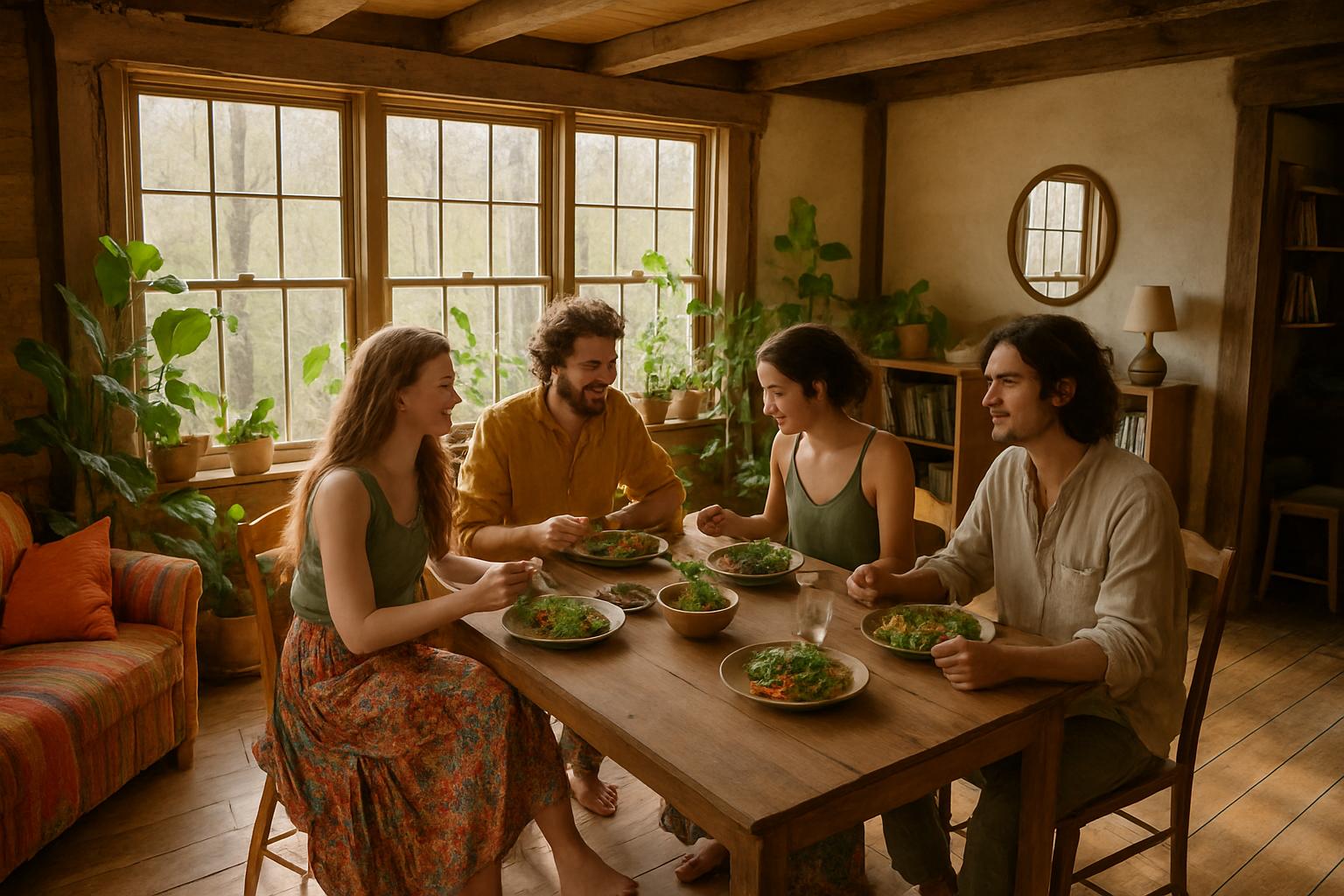
In a world frayed by disconnection, rising costs, and environmental recklessness, a quiet revolution brews in the woods and fields. Small groups are crafting new blueprints for living—rooted in trust, shared purpose, and collective action. Can the answers we seek to rebuild a fractured society emerge from these intimate experiments?
Here’s the revised blog post with the flagged words and phrases replaced:
Are Intentional Communities the Way Forward? Meet the Young People Opting Out of Society and Building Utopia For Themselves examines the renewed popularity of communal living as a response to societal challenges. Focusing on the Sirius Community in Shutesbury, Massachusetts, the article shines a light on a group of young individuals redefining what it means to live purposefully. Located on 90 acres, Sirius is an ecovillage where approximately 30 residents prioritize sustainability, shared responsibilities, and interconnected living. Participants like Gabriel Futterman view this lifestyle not only as a personal choice but as a model for a new societal approach—one that could persist in the face of systemic collapse.
While intentional communities have roots in movements from the 1960s and earlier, they now appeal to a generation disillusioned by rising housing costs, environmental degradation, and social disconnection. These communities act as “living experiments,” testing governance systems, conflict resolution practices, and collaborative approaches to organizing life. From hosting communal meals to growing food and redistributing responsibility, these groups try out frameworks based on mutual support rather than individualism. Although their numbers remain small, younger participants like Futterman emphasize the role of these communities as practical alternatives that merge visionary ideas with concrete actions, encouraging others to explore pathways of collective resilience.
What Sets This Movement Apart
In a time when many young people are reassessing traditional structures, intentional communities provide an alternative idea of how society could work. By tackling major challenges like unaffordable housing and environmental instability, these communities demonstrate the potential of shared lifestyles while addressing inefficiencies common in modern, individualized living. Intentional communities like Sirius establish structured agreements, encourage personal accountability, and emphasize local production—all while helping participants reconnect with nature and ecological responsibility. The rise of internet trends like “cottagecore” further reflects a cultural desire for simpler, more grounded living, pointing to wider interest in these ways of life.
Benefits
- Sustainability: Communities like Sirius show that small-scale food cultivation and energy-conscious living can be achieved without major trade-offs.
- Social Bonds: Building meaningful relationships through shared goals and cooperative living can alleviate social isolation.
- Alternative Governance: Systems tested here could inform broader societal structures by refining collaborative methods for conflict resolution and resource management.
Concerns
- Accessibility: Many of these arrangements require time, resources, or conditions that are not within reach for everyone.
- Scalability: While functional on a small scale, questions remain about how such frameworks could support larger populations sustainably.
- Generational Gaps: Tensions between younger members seeking significant changes and older residents preferring tradition might disrupt harmony.
Potential Business Use Cases
- An online platform to connect intentional communities with people interested in joining, offering resources on governance models and shared living logistics.
- A farm-to-community subscription service providing locally grown, responsibly produced foods to neighborhoods, modeled after Sirius.
- A consultancy that helps cities and neighborhoods adopt intentional community ideas into urban planning for targeted solutions to shared challenges.
The renewed interest in intentional communities prompts us to reconsider what we prioritize in how we live, interact, and sustain ourselves. These small-scale societies remind us that meaningful change doesn’t have to wait for sweeping policy reforms; it can emerge through the everyday habits of a dedicated few. However, for these concepts to influence larger solutions, society must grapple with the drawbacks and adapt ideas to fit diverse circumstances. They present a timely and pressing question: could the solutions we’re looking for to mend broken systems lie in rethinking our shared interdependence, one small community at a time?
—
You can read the original article here.
Image Credit: GPT Image 1 / Custom Prompt.
—
Building a world that works for everyone — through collaborative intelligence, practical solutions, and regenerative community.
Join the movement → eden.coop