What if the way we live—the very spaces we call home—could mend the fractures of modern isolation while nurturing a deep sense of purpose and connection? As loneliness expands its reach, could radical shifts in how we build and share our environments offer a path back to belonging?
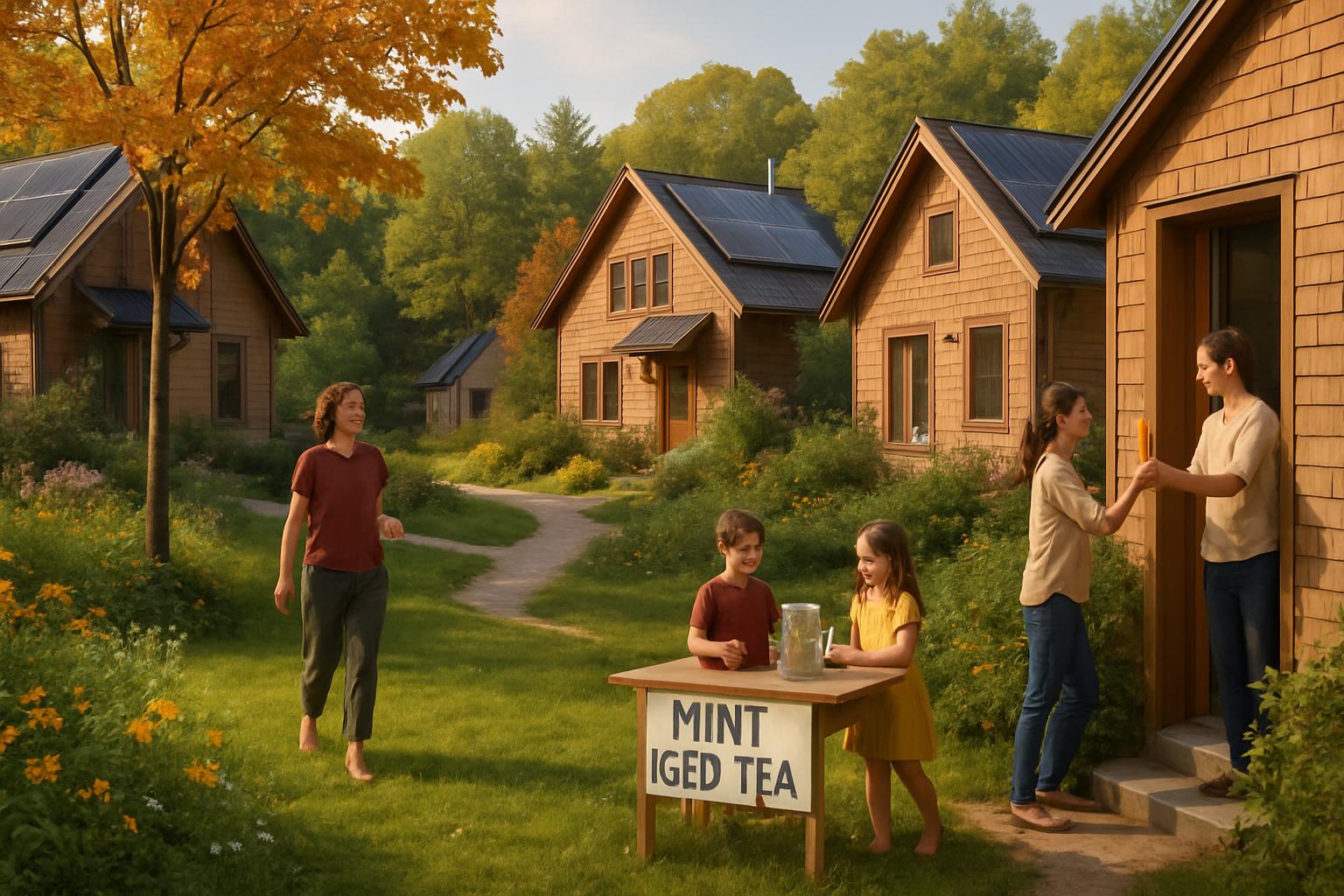
A countercultural way to live: An inside look at a modern ‘intentional community’ explores the Nubanusit Neighborhood and Farm (‘Nubi’), a cohousing community in Peterborough, New Hampshire, designed to balance individual homeownership with shared space and collective living. Built on 113 acres, complete with pathways, a shared Common House, and an eco-friendly ethos, the community represents a vision of connected, sustainable living. Residents maintain individual jobs and kitchens but come together frequently for meals, decision-making, and co-management of the farm. The commitment to consensus-driven choices and a shared workload challenges the hyper-individualistic tendencies of modern life, encouraging a neighborly closeness often missing in traditional neighborhoods.
Historically, the cohousing concept began in Denmark in the late 1960s, later appearing in the U.S. in 1991 with the creation of Muir Commons in California, setting the stage for over 180 such communities nationwide. Interest in this living arrangement spans all age groups, with many families noting reduced stress and a deeper sense of community. At Nubi, sustainability is central to the vision through farming initiatives and collaborative problem-solving—though disagreements are inevitable, from the fate of a 200-year-old sugar maple to monthly budget priorities. Life here, while intentional and interdependent, provides a refreshing alternative to the social isolation and logistical challenges of traditional suburban or urban living.
The article also examines the practical and philosophical goals of this lifestyle. From easing loneliness through proximity-based relationships to balancing personal convenience with shared benefits, the neighborhood shows the depth and nuance of intentional communities. It challenges the idea that meaningful connection and shared goals cannot fit within the fast pace of modern life. For families, retirees, and individuals alike, this model offers an interesting perspective on redefining community with a foundation of mutual respect and shared goals.
Why it’s notable
As anxiety about widespread loneliness grows—highlighted by reports detailing the diminished civic connection in places like America—intentional communities like Nubanusit are real-world experiments in reversing this trend. Beyond their small footprint, cohousing communities tackle broader societal questions: How do we build environments where connection, purpose, and sustainability thrive? For families, these neighborhoods ease stress by creating environments that require no car trips or complex schedules to build friendships. Meanwhile, retirees find new purpose and intergenerational interaction. These changes favor a slower, grounded rhythm that attracts those seeking a life less isolated.
Benefits
- Stronger community bonds through shared purpose and proximity-driven relationships.
- Lower carbon footprint and cost efficiency due to shared resources like carports, heating systems, and farming initiatives.
- Improved emotional well-being, particularly for families, through reduced logistical burdens and naturally occurring peer networks.
- Opportunities for purposeful aging, with older residents benefiting from a robust safety net of accessible neighbors and communal support.
Concerns
- Consensus-based decision-making can delay progress during disputes, particularly with diverse perspectives.
- Initial investment in infrastructure and land acquisition might make it accessible only to certain income brackets.
- Balancing privacy with community participation may challenge individuals not accustomed to shared living environments.
Possible business use cases
- Eco-friendly architectural firms can specialize in designing purpose-built cohousing spaces that integrate sustainable farming and collective living features.
- Technology platforms can simplify decision-making processes for intentional communities, including voting, task assignments, and consensus tracking.
- Subscription-based professional services could support these communities with practical legal, financial, and logistical frameworks for efficient management.
Cohousing presents not just an alternative living model but a response to the pressing needs of our times—connection, interdependence, and sustainability. It reconsiders what it means to thrive, emphasizing that fulfillment is often found not alone but within shared spaces and purposes. Yet, as with any ambitious vision, challenges persist. Whether cohousing scales to cities or remains a niche solution may depend on how well its ideals align with wider societal systems. Still, reflecting on these communities pushes us to reconsider the important ways housing shapes everything from mental health to environmental responsibility. In rethinking how we live together, we may discover solutions to problems far beyond the neighborhood boundary. Perhaps it’s not just living arrangements we must rethink, but the very rhythm by which we create a home in the world.
—
You can read the original article here.
Image Credit: GPT Image 1 / Custom Prompt.
—
Building a world that works for everyone — through collaborative intelligence, practical solutions, and regenerative community.
Join the movement → eden.coop